Modern Russian language: Globalization and Digital
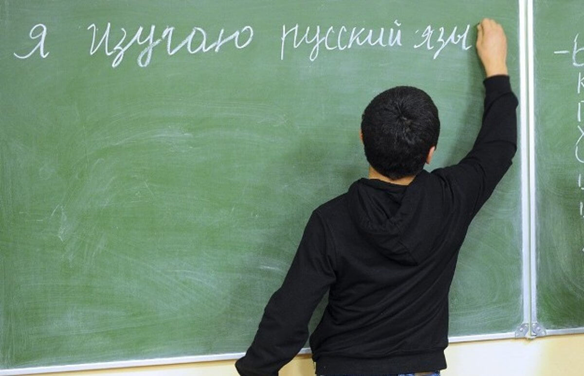
There is a common stereotype. Interest for Russian is shown only by those who want to study in Russia, are in love with Russian culture, or maybe do modern research. They may explore space or cultivate basic science: mathematics or physics – from studying molecular physics to researching low temperatures. But there are also artificial intelligence studies, programming, or finally analytics – from information security to neural networks which process big data sets. All of these people speak Russian as well as think and work in it. That's all true, but it is not enough.
The Russian language is not just a rare "thing" that provides a competitive advantage. It is simply another convenient and all-purpose tool to reach success in today's world. In Runet alone, there is an enormous amount of content available in Russian. And it is not only entertaining content. It is also educational, cultural, scientific information. Access to it dramatically broadens cultural contacts, primarily for near abroad residents.
Example one: Kyrgyz rappers rhyme in Russian
Rap is a complicated thing. On the one hand, all over the world it makes up an important part of contemporary culture, especially youth one. On the other hand, in terms of various language expressions, poetry in particular, it is a very complex phenomenon to be researched. Rappers usually start rhyming natively, but not everyone stops there.
If a native language is English, Spanish, or, let’s say, Hindi, a rapper has an audience of millions! And what if it is less common? In Kyrgyzstan, for example, the state language is native to only four million people. Of course, ethnic Kyrgyz live in other countries: Afghanistan, Russia, China, Kazakhstan, Tajikistan, etc. But there are still relatively few people. How can Kyrgyz rappers reach a wider audience? By rhyming both in their native language and in Russian!

You can rhyme "without giving up your Kyrgyz education," as Yamadzhi, Feydzhi, and Bastayan show in the track "Flakon" – a rap single that combines two languages in great style. It should be reminded that everyone can speak Russian in Kyrgyzstan as it is the country’s official language. People living in countries of the region will hear and understand a rap single in Russian — most people know this language in Kazakhstan, Turkmenistan, as well as, for example, in Afghanistan. Obviously, performing in this language, Kyrgyz rappers will also be understood throughout Russia! And the broad reach means popularity, and being in demand among radio stations, music TV channels, and live performances at different venues. That is how you can communicate values of the young generation to millions of listeners, bring new aesthetics and "our flow, our beat", as Yamadzhi and Feydzhi rhyme in the single "Minimum".
Listen to the tracks of Bayastan, Tamga, Feydzhi, Yamadzhi and others — you can find them on YouTube — and you will be pleasantly surprised by the style of Pushkin and Pasternak's language which is interpreted, reinterpreted and mastered by young guys from the heart of Asia!
Tamga comments: "Words should have meaning rather than hype! Choose the right way. When fortune gives you a chance, take the big world in your arms!" In what language are these words? In Russian.
Example two: Russian for TikTokers
TikTok is a Chinese invention. Its format was adopted by all video hosting services and social networking sites. Short videos have become mega-popular in a dynamic world, and they are adopted and used by young artists, dancers, and magicians, as well as by others who seem to be far divorced from youth trends. For example, the TikTok format is already used by school physics tutors, science popularizers, instructors in photographing and video recording, gadget testers, cooking fans, and many others. The format, as it happens, can be suitable almost for everyone who can and wants to be quite compact, expressive.
Certainly, reach is important for TikTokers; they fight for followers. But how do you reach a wider audience? The story is similar to the rappers referred to above, just in a different format. Of course, dancers and magicians, acrobats and jugglers, mimes and clowns can do it without using words. Their body language is clear to everyone, but what about the others? You have to broadcast in a language known to millions! That is where Russian is perfect, and on a global scale.
If we look at the prevalence of Russian on the Internet, the situation is radically different. In the top five most popular "languages of the Internet" Russian takes second place! It has ranked second since 2013, W3Techs research says. In this case, popularity was measured by analyzing the share of content on the Web, resulting in the top five languages: English, Russian, Japanese, German, and Spanish.
As we can see, Russian-language content creators become straightway top performers, which is actively used by many. Watch Russian-language videos from Kyrgyzstan and Kazakhstan, Azerbaijan and other near and far abroad countries on TikTok. There are a lot of them!
Practical conclusions and general observations
Russian has been and remains the language of international communication for dozens of nations! It should be noted that in many countries Russian is a key tool for such a sensitive matter as communication between generations. Throughout centuries, national elites in different regions of Eurasia spoke Russian and thought in it. As a second language, it was perfectly known by Khans and educators, artists and tradesmen, builders and architects. To follow their train of thoughts better and deeper, to touch their peoples’ history, learning the Russian language will be extremely useful to Kyrgyz or, for instance, Azerbaijani rappers, TikTokers from Kazakhstan or Mongolia. This is not to mention the fact that their fathers and grandfathers were also bilinguals in the Soviet period.
Despite the fact that in many CIS countries Russian is not a state language in law, it is a state language in fact. Documenting, business, arts, education — everywhere the knowledge of Russian gives an advantage. People living in the former Soviet republics are better aware why it is important to know Russian: those who want to succeed learn "the great and mighty".