Beauty is one of the three main advantages of perfect gemstone. It is the beauty that is noticed first, and, of course, it can be considered as the main of the three qualities, because beauty, due to the color or transparency of the stone or a combination of these properties, attracts the human eye to the stone. These qualities are closely related to the structure of the stone; therefore, gemstones (except for opal and turquoise, which are valued as ornamental stones) are the most beautiful examples of crystals that nature is capable of. The largest source of large crystals is the various erupted rocks that make up the earth's crust. These rocks were formed as a result of the crystallization of molten magma, which rose from great depths and froze on or near the surface of the earth, with a temperature range ranging from 950 to 450C. But because lava freezes quickly at the surface, the rocks are mostly fine-grained and therefore unlikely to be the source of the desired precious material.
More likely are the finds of gemstones in the erupted rocks, formed at great depths in the Earth's crust either in the form of large deep masses or in the form of branching and straightforward veins (dikes), departing from these masses by cracks in the host rocks. Under these conditions, magma freezes more slowly, so that the crystal has time to grow to large sizes.
Most of the magma hardening in the crust is similar in composition to the most widespread volcanic rock — basalt. It's chemical composition includes SiO2 silica — about 50, Al2O3 alumina, calcium oxides CaO, magnesium MgO and iron (FeO and Fe2O3). Rocks with such a low silica content (compared to other types of rocks) are called basic rocks. When the crystallization of such magma begins, magnesia olivine is released first in significant amounts. Its silica content is lower than the total silica content of magma; if the crystals of olivine (peridot) make up a large part of the formed rock, which is called peridotite, then this rock will be ultramafic in composition. This type of rock fills the diamondiferous tubes of South Africa; together with olivine, it is possible to crystallize the pyrope, a magnesium garnet, which is also poor in silica.
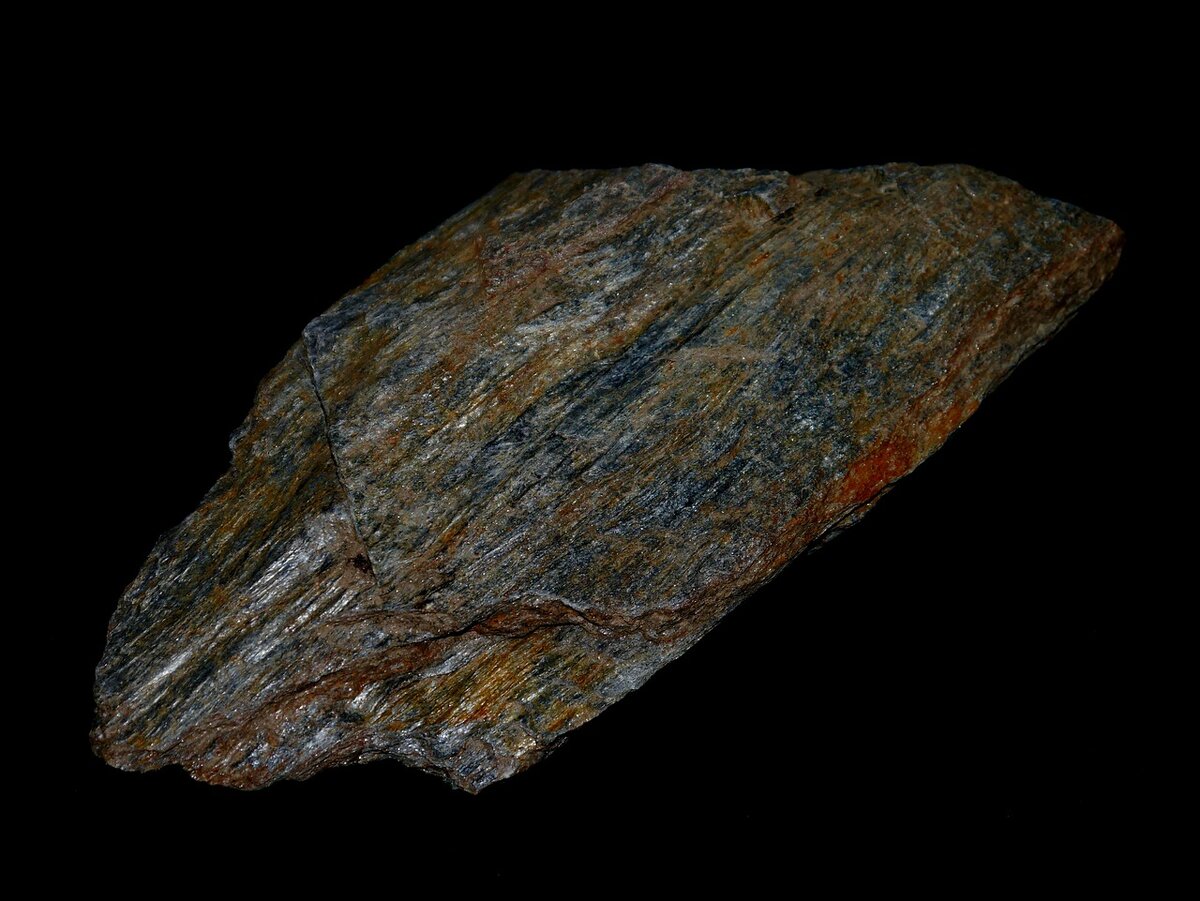
Crystallization of ultramarine rocks from magma leads to the fact that the rest of the melt is enriched with silicon; the magmatic rocks formed at later stages of the process have a more acidic composition (i.e. are characterized by a higher content of silica (70 and more)). Along with the increase in silica content, the concentration of rare components — lithium, beryllium, boron, etc., which were not involved in the initial stages of crystallization — will also increase. The concentration of volatile components — fluorine, chlorine, hydrogen — is also increasing; they play a significant role in reducing the viscosity of the melt at later stages, providing greater freedom of growth of large crystals. Therefore, at the final stage of magmatic activity, large-crystalline hematite bodies are formed, characterized by large crystals of quartz, feldspar, and mica. This stage is favorable for the formation of gemstones such as tourmaline, beryl, topaz, and spodumene. Zonally colored tourmaline crystals show how conditions can change during crystallization, but remain favorable for crystal growth at all times.
Extraction of gemstones from hard, non-weathered rocks is rarely profitable (except the famous diamondiferous tube developments in South Africa). It is here that one can see one more advantage of a perfect gemstone — its durability. The precious material, being in the rock, feels the influence of weathering together with it and therefore can be easily isolated from the weathered soft base mass of the rock. In addition, when the rock is destroyed and its components are carried away by water, the precious material remains practically intact due to its higher hardness and higher density and accumulates in the channels of ancient or modern streams and rivers.
Pelletized edges and the roughness of the edges can be found on the stones, which is associated with prolonged friction against adjacent particles during the transfer by water flow.
Continuation in the next part.