Gemstones are classified according to a number of specific characteristics. Minerals are classified by origin — genetic classifications, by their composition, by their most characteristic element (e.g., minerals containing iron, tin, copper, etc.), by crystallographic features. At present, the most common classification of minerals is by chemical composition (by types of chemical compounds and bonds) taking into account their structural types.
Classifications of gemstones and ornamental stones differ from the generally accepted mineralogical classifications, primarily because their value and the real value lies at the heart of the division of gemstones. In Saxony, as early as the beginning of the 19th century, gemstones were divided into 1) precious stones, 2) therapeutic stones, and 3) stones used in construction, for making vases, statues, etc.
In the middle of the 19th century, jewelers in Europe divided gemstones into two groups: eastern and western, which differ in hardness.
In 1860, the German scientist K. Kluge (1860) proposed almost the first scientifically substantiated classification of precious and semi-precious stones, which he divided into two groups: truly precious minerals and standard precious minerals. The first group included stones of I, II and III classes, and the second group included stones of IV and V classes.
K. Kluge classified diamond, corundum, chrysoberyl, and spinel as Class I, zircon, beryl, topaz, tourmaline, garnet, noble opal as Class II, and cordierite, vesuvian, chrysolite, axinite, kyanite, staurolite, andalusite, chrysolite, epidote and turquoise as Class III.
In the group of semi-precious stones K. Kluge included class IV stones: quartz (amethyst, rock crystal, pink quartz, aventurine), chalcedony (agate, corneal, plasma, heliotrope, kaholong, jasper and ordinary hydro fan), feldspars (modular, amazonite, labrador), obsidian, lazuli, gain, hypersten, diopside, fluorite, amber and V class: Jadeite, nephrite, serpentine, agalmatolite, bronze, satin feldspar, marble, selenite, alabaster, malachite, pyrite, rhodochrosite, hematite, prenite, nepheline, lepidolite, etc.
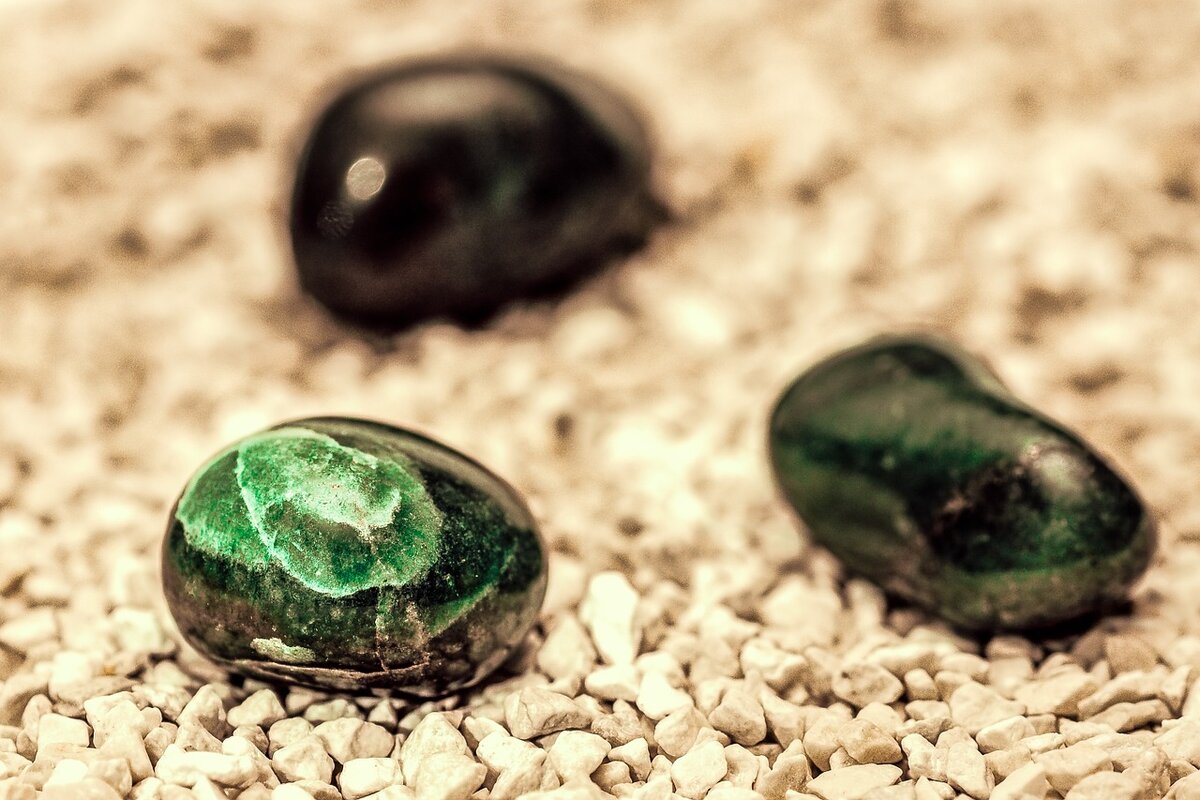
The classification of gemstones of a German professor of mineralogy G. Kluge is very close to the classification of gems. Gurich (1902). He combined all transparent minerals characterized by high light refraction and used for jewelry making into first-class gemstones; semi-precious stones were singled out separately. Minerals occurring in the amorphous state or in the form of fine-grained crystal aggregates were attributed to the group of stones of the second kind (colored stones). G. Guerich divided gemstones into five different classes according to their value. Class, I gemstones was diamond, corundum, chrysoberyl, and spinel, class II was zircon, beryl, topaz, tourmaline, and pomegranate, as well as noble opal from the colored stone group, class III was cordierite, chrysolite, kyanite, and other gemstones, and turquoise from the colored stone group. Class IV included such semi-precious stones as quartz, feldspar, fluorite and colored stones as aventurine, cat's eye, chalcedony, opal, obsidian, lapis lazuli, and amber. Colored stones from the group of colored stones (hematite, nepheline, nephrite, gagat, coil, alabaster, malachite, etc.) belong to the V class.
At the end of the 19th century, M. Bauer (1896) proposed a new classification of gemstones, which for a long time enjoyed popularity among mineralogists and jewelers. M. Bauer's classification was later supplemented and expanded by A.E. Fersman. Jewelry and ornamental stones are divided into three groups: I — gemstones (gems), II — ornamental stones (colored stones), III — transgenic gemstones. Within the group, the stones were divided into orders of magnitude depending on their value. Group, I included mainly transparent colorless or beautifully colored stones and part of translucent colored stones used in cut form. Group II includes a number of minerals and rocks suitable for cabochonation and for various crafts. The classification of M. Bauer-A.E. Fersman is given below.
A group of stones:
I Gemstones (gems)
1 order Diamond, ruby, sapphire, emerald, alexandrite, noble spinel, euclase
2 order Topaz, aquamarine, beryl, red tourmaline, demantoid, blood amethyst, almandine, uvarovite, jadeite, noble opal, zircon.
3 order of magnitude
1. Pomegranate, cordierite, kyanite, epidote, dioptase, turquoise, variscite, green tourmaline;
2. Rock crystal, smoky quartz, light amethyst, chalcedony, agate, carnelian, heliotrope, chrysoprase, phrase, semi-furnace;
3. Solar stone, moonstone, Labrador, nepheline, sodalite, obsidian, titanite, benitoite, prehnite, andalusite, diopside, scapolite, thomsonite
4. Hematite, pyrite, cassiterite, quartz with gold.
Continue in the next chapter.